



-
9 Saturation
-
8 Aftertaste
-
8 Aroma
-
9 Effect
-
8 Balance
-
9 Body
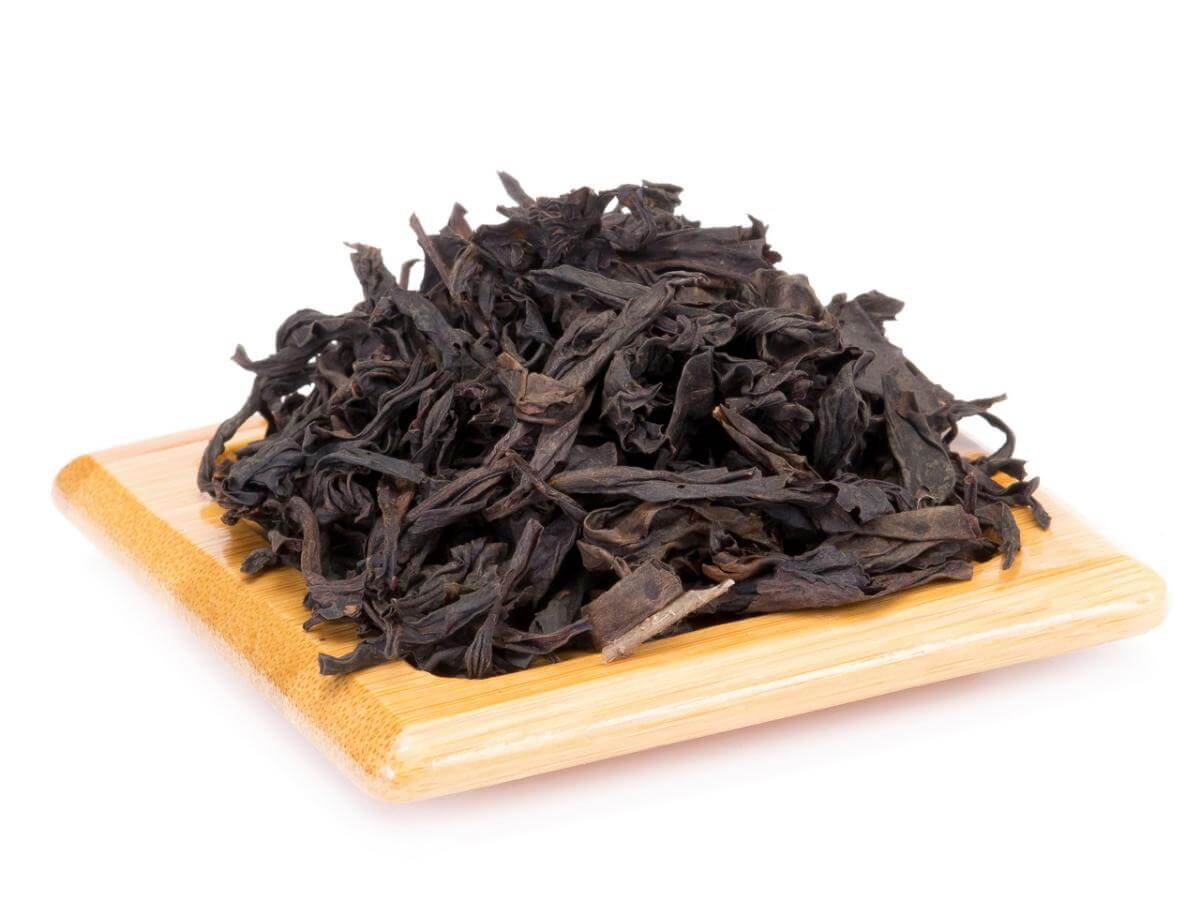
The world-famous Chinese tea " Da Hong Pao," known as " Big Red Robe," grows in the northwestern part of Fujian Province. Based on its production technology and taste, it is classified as a highly fermented oolong tea. This cliff tea, grown in the Wuyi Mountains, is hand-picked and produced using traditional methods. The leaves are carefully rolled, ensuring their long, beautiful appearance.
The rolled leaves are roasted over an open fire in mesh baskets. Special ovens are also used to produce this legendary tea, ensuring the leaves dry evenly. Thanks to a production technique passed down from generation to generation, the tea retains its quality for three years. Tea production involves many stages:
- drying the leaves after collection in the air;
- careful turning of the shoots to speed up fermentation;
- roasting the leaves in a hot cauldron for several minutes;
- twisting;
- warming tea in baskets over coals.
- After the final heating, the leaves acquire a rich color and the appearance that Da Hong Pao tea consumers are accustomed to seeing.
Many interesting myths surround the origin of this popular tea's unusual name. According to one version, it was first called Red Robe in 1385. Manuscripts discovered in the Tian Xing Si Monastery explain the connection between the tea and a monk who cured a student with it. Ding Xian, the student, suffered heatstroke while on his way to an exam.
A monk from the monastery restored the boy's health and strength using only one infusion—tea. When the student successfully passed his exam, he presented his red robe to the monk who had cured him. But the healer refused the gift, as he followed Buddhist traditions. As a sign of respect and gratitude, the boy placed his robe on the tea plant that had healed him. After these events, Chinese tea from Fujian became known as Da Hong Pao, which translates as "Big Red Robe."

Аромат сухого чайного листа пряный, насыщенный. Прослеживается горькая карамель, корка горячего ржаного хлеба, пряности и специи. После промывки аромат становиться ярче, угадывается горький шоколад, черный ржаной хлеб со специями.
Вкус заваренного чая насыщенный, в меру крепкий, с нотами горькой карамели, жженого сахара и домашнего ржаного хлеба. К четвертому проливу вкус чая разбавляет уверенная горчинка, преобладают оттенки специй и горького шоколада.
Для заваривания Да Хун Пао рекомендуется использовать чайник из исинской глины, которая лучше всего раскрывает вкус и аромат чая. Этот Да Хун Пао выдерживает 7 полноценных проливов при условии если заваривать 5 гр. чая в 150 мл чайнике.
Цвет готового настоя желто-коричневый с темно-янтарным оттенком. Послевкусие сдержанное, с умеренной горчинкой и нотами жженого сахара.
Данный улун неплохо тонизирует и придает сил, обладает успокаивающим и общим расслабляющим эффектом. Он способен убрать ненужные мысли из головы, настроить на нужный лад и вводит в легкое медитативное состояние.
Да Хун Пао 4 Нун Сян придется по вкусу любителям темных улунов, чая сильного и мощного, с ярким вкусом и не менее ярким состоянием.
|
Name in Chinese
|
浓香大红袍 |
|
Pinyin
|
dàhóng páo |
|
English name
|
Da hong pao 4 Nun Xiang |
|
Translation
|
Big red robe |
|
Tea variety
|
Да Хун Пао |
|
Country
|
Китай |
|
District
|
Wuyi Mountains |
|
Region
|
Иу шань (易武山) |
|
Habitat
|
Уишань Баньян (武夷山半岩, wǔyíshān bànyán) |
|
Type of tea
|
Улун |
|
Length, cm
|
2 |
|
Width, cm
|
1 |
- Reviews
- Vkontakte

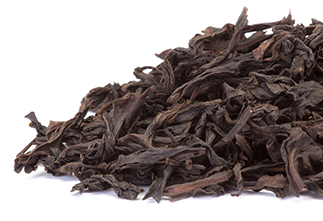
Da Hong Pao (大红袍, Da Hong Pao, Big Red Robe, DHP, Da Hong Pao) is a famous Chinese cliff oolong tea with strong fermentation, produced in the Wuyi Mountains in northwestern Fujian Province. Along with Pu'er, Tie Guan Yin, and Long Jing, it is among the most famous Chinese teas.
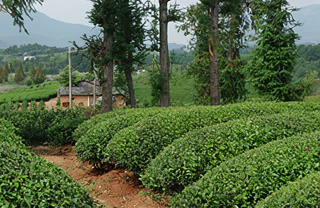
The Wuyi Mountains, and shan, as is known, is translated as "mountain" or "mountains", are located on the border of the provinces of Fujian and Jiangxi. This is a mountain range located on an area of about 1000 square kilometers. The highest point is Mount Huanggangshan, 2158 meters high, which is included in the UNESCO World Cultural Heritage, both for cultural and natural criteria.


