



Турецкий чай в стакане-тюльпане армуду: традиция и смысл
Tea in Turkey is more than just a drink; it's an integral part of culture, hospitality, and everyday life. It's enjoyed everywhere: at home, in tea gardens (çay bahçesi), at work, or when visiting friends. But what distinguishes Turkish tea drinking from many other tea traditions is the teaware.
Instead of traditional cups or mugs, Turks use elegant glass tumblers with a "narrow waist," often called "armudu" in the Russian-speaking tradition, and in Turkey itself, ince belli bardak, meaning "glass with a thin waist." The name "armudu" derives from the glass's distinctive pear-shaped form: the Turkish word "armut " means "pear." Why did this particular shape become part of Turkish tea culture? The answer lies in history, practicality, and aesthetics.
Historical roots of tradition
The tradition of drinking tea from armudu glasses dates back to the Ottoman Empire, when tea began to become part of everyday culture in the 19th century, although tea became widespread in Turkey only in the 20th century. While coffee was served in small cups, new glassware was needed for tea. Armudu-shaped glasses, resembling tulips or pears, became popular: they were easy to make, affordable, and convenient to use. The exact origin of this shape is unknown, but similar vessels for hot drinks were common in other countries in the region. It is believed that this shape came to Turkey via trade routes from Persia or the Caucasus.
Interestingly, the shape of the armudu echoes the symbolism of the tulip—a flower associated with peace, tranquility, friendship, and love in Ottoman culture. Since tea in Turkey is a ritual of socializing and intimacy, the choice of such a glassware seems quite appropriate. Another theory is related to cost-effectiveness: in the 1850s, with the development of the glass industry in the Ottoman Empire, manufacturers began making complex glass tumblers without handles, tapering in the middle for easy storage.
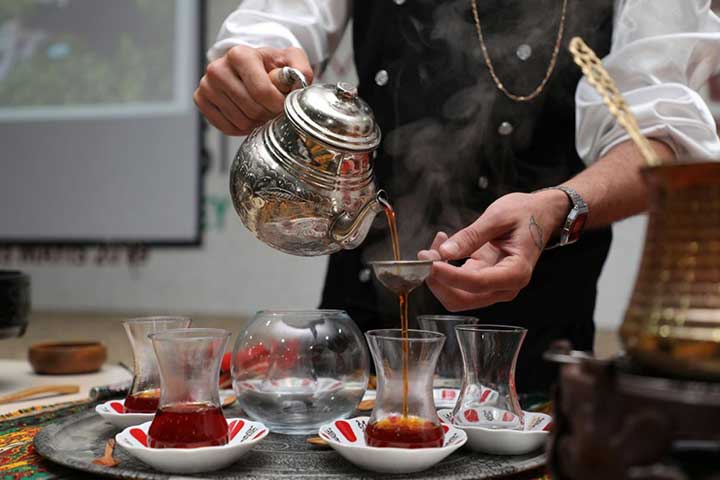
One of the first known depictions of a glass of this shape was by the Turkish artist Hodja Ali Rıza (1858–1930): in his work depicting a samovar, one can see the characteristic glass with a narrow waist. One way or another, the armudu became firmly entrenched in Turkish life and became a symbol of their tea tradition.
Practicality and functionality
The shape of the armudu glass—with a narrow waist, wide bottom, and slightly flared top—is meticulously designed. Its capacity is small, typically 100–150 ml, making it ideal for traditional Turkish tea, which is sipped in small portions. The narrow waist makes the glass comfortable to hold, even when the beverage inside is very hot. The bottom retains heat longer, and the flared top, where the tea cools faster, makes drinking comfortable. It is this combination of a narrow waist, widened top, and small volume that explains why Turkish tea is traditionally drunk from tulip-shaped glasses.
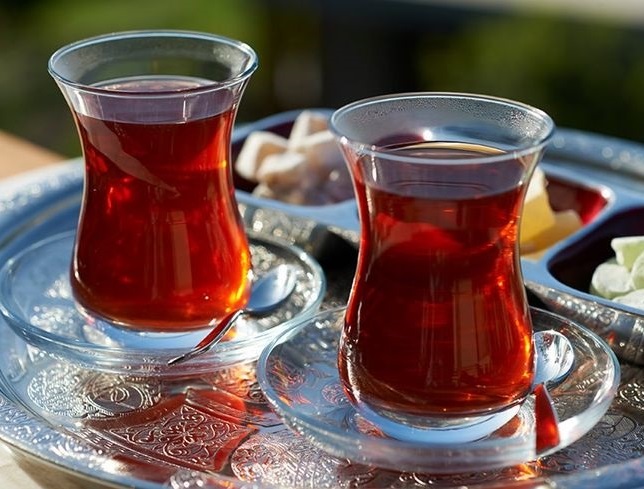
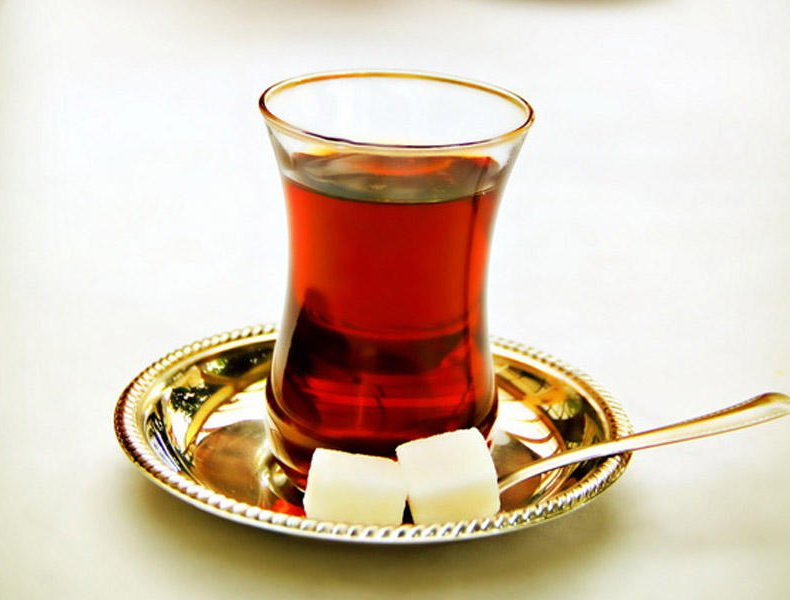
Moreover, clear glass allows one to appreciate the tea's full beauty. Turks prize its rich ruby hue, which they call "tavşan kanı" ("hare's blood") . Seeing the drink through clear glass is part of the aesthetic pleasure. The wide bottom of the glass promotes slow cooling, which is essential for the long conversations for which Turkish tea parties are famous. Tea in Turkey is usually served on a small saucer with a spoon and sugar, although many prefer to drink it without sugar, savoring the pure taste of the tea.
Cultural significance
Armudu glasses are more than just tableware. They reflect Turkey's love of detail and respect for tradition. Tea drinking in Turkey is a ritual that brings people together. Whether it's morning tea with family or an evening get-together with friends, armudu glasses create a special atmosphere.


Turkish tea and the traditional utensils used to serve it are closely associated with hospitality and social interaction. Offering a guest a glass of hot tea is a traditional sign of attention and warmth. In 2022, the çay culture of Azerbaijan and Turkey was inscribed on UNESCO's Representative List of the Intangible Cultural Heritage of Humanity as a symbol of identity, hospitality, and social interaction.
Their exquisite form combines practicality and beauty, making every sip of aromatic tea even more wonderful.
Today, armuda is used not only for tea but also for herbal infusions, ensuring its versatility. This tradition, which has existed for many decades, continues to live on, passing through generations and serving as a reminder that simple things can become symbols of national identity.
Conclusion
Narrow-waisted glasses are more than just convenient tableware; they reflect the history, aesthetics, and lifestyle of the Turks. They originated as a practical solution, but over time, they evolved into something more—a symbol of comfort, communication, and hospitality. Drinking tea from an armudu is not only a way to savor the beverage but also a taste of the rich Turkish culture, where even the shape of the glass has its own history.