




-
10 Saturation
-
10 Aftertaste
-
10 Aroma
-
10 Effect
-
10 Balance
-
10 Body
The aroma of dried tea leaves is calm and restrained, with a pleasant bitterness of freshly cut wild herbs. After washing, the tea opens up from all sides, highlighting its dense, herbal bitterness with hints of wild honey.
The brewed tea has a soft and balanced flavor, without the bitterness typical of young pu-erh teas. It has a fruity, herbal flavor profile with citrus notes and hints of apple.
As the infusion is steeped, it develops a slight tartness with a pleasant bitterness that beautifully accentuates the citrus notes. The finished infusion is clear and transparent, a light mustard color.
The aftertaste is sweetish, voluminous, with nuances of ripe apples.
This pu-erh tea can withstand six full steeps. It is recommended to use a Yixing clay teapot or porcelain gaiwan for brewing.
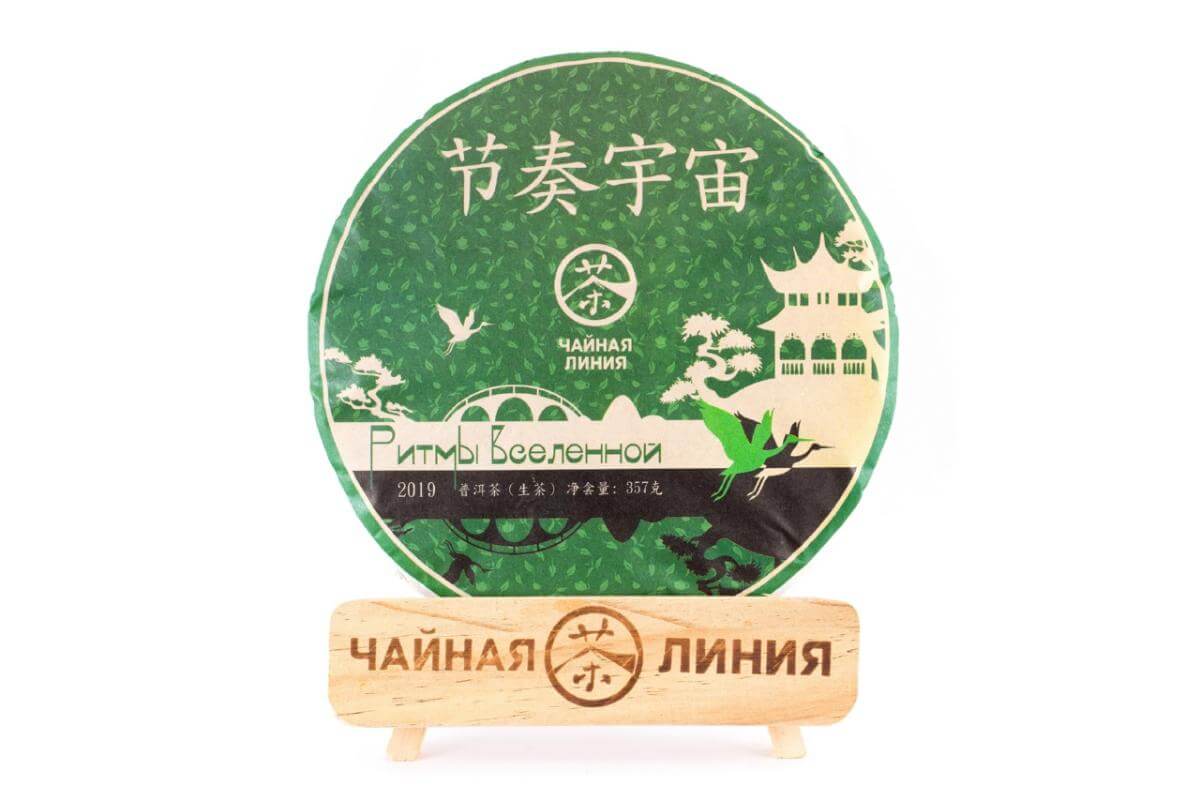
Sheng Pu'er "Rhythms of the Universe" from Tea Line is a high-quality, simple, and easy-to-use pu'er tea for daily drinking that's already a pleasure to drink. It perfectly invigorates and combats drowsiness, calms and uplifts the mood, and gives strength and confidence.
|
Name in Chinese
|
节奏宇宙 |
|
Pinyin
|
jiézòu yǔzhòu |
|
Translation
|
Rhythms of the Universe |
|
Country
|
China |
|
District
|
Xishuangbanna Dai Autonomous Prefecture |
|
Manufacturer
|
ООО "Чайная Линия" |
|
Date of raw material production
|
spring 2022 |
|
Year of pressing
|
2025 |
|
Pressing form
|
Bing Cha (Cake Tea) |
|
Declared weight, g
|
357 |
- Reviews
- Vkontakte
Over time, some consumers who are part of the country's "tea elite" discover mainland Chinese tea. And only a few get acquainted with Taiwanese varieties. The path of a tea person is usually long and thorny, but ultimately it leads to the King of Teas - puer. But not everyone is able to go all the way from ordinary teas to puer and appreciate its qualities.
The tea ceremony occupies a special place in the centuries-old Eastern tradition. And although the essence of this phenomenon remains constant, the nature and external manifestations of the tea ceremony in different nations have their own national characteristics. In each Chinese province, the tea ceremony and the tea used in it are varied: for example, residents of the southern provinces prefer green tea, and residents of the northern provinces - red tea, in Fujian province they more often use Oolong tea, and in Yunnan province Puer tea is widely known.
Need a consultation?
Our specialists will answer any question of interest


