



Menghai Tea Factory and Dai Brand
Menghai (Chinese: 勐海 茶厂, pinyin: měnghăi cháchăng, official website of the plant: http://www.dayitea.com ) is one of the oldest and most respected tea brands in China. Menghai Tea Factory produces more than 750 tons of tea of more than 120 types per year. The plant owns 220,000 acres of tea plantations, it is the second largest plant in the province, the number of people working there exceeds 800 people. 48 products of the plant have been awarded at various times by the provincial and national governments.
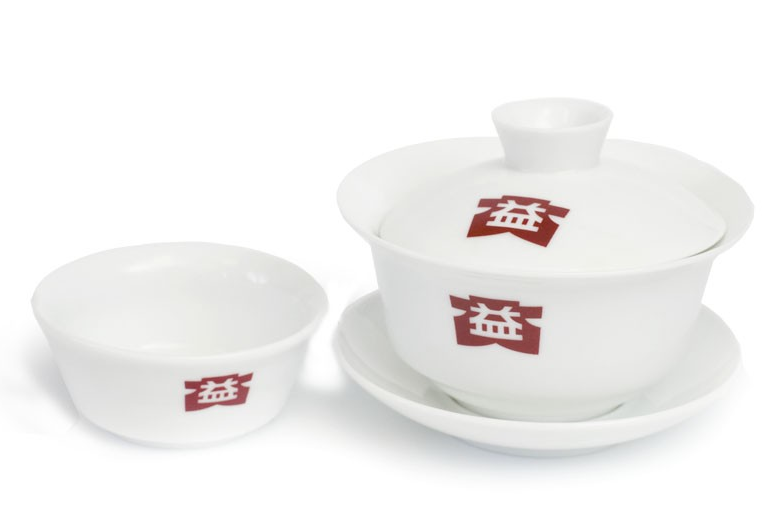
Menghai black teas and pu-erhs are exported to many countries. Of all the pu-erh companies in Yunnan, there is not one that has so many links to the history and traditions of classic pu-erh in its current operations. The aged pu-erh market is now dominated by old cakes made during the time when Menghai was a state-owned town – so any researcher who wants to understand the history of pu-erh must also know the history of Menghai.
The history of this factory dates back to 1938, when the Chinese government assigned Zhenghe Chun (郑鹤春) and Feng Shaoqiu (冯绍裘), two employees of the China Tea Company (中国茶业公司), to Yunnan Province to tap its economic potential as a tea production center. They mapped the area and compiled a report on its agricultural capacity.
1940 - Fohan Experimental Tea Factory (佛海实验茶厂) was founded under the leadership of Mr. Fan Hejun (范和均)
TaiIn August 1941, production was launched and the first tea (black and green) was produced. That same year, World War II came to Yunnan. The Japanese invaded from the Burmese border - and a decision was made to move the factory to Kunming. Much of the installation work for this southern factory had already been completed, but the managers had instructions not to leave anything that the Japanese could use - so all the tea machines were dismantled.
The new factory in Kunming operated for only about a year during the war. According to Fan Hejun's notes from that time, the factory's management was advised not to produce much tea, but instead to help farmers throughout Yunnan pack green tea, black tea, and pu'er for export. Most of the tea at that time was exported to Tibet, Burma, and Thailand. In 1942, the factory closed completely as the war entered a more serious phase. The managers tried to reopen it in 1944, but the venture was abandoned after a few short months of operation.
According to Fan Hejun, the factory could not produce tea under those conditions. Its main role at the time was small-scale production and helping small suppliers prepare documentation for export outside of China. During that time, they managed to export 78 boxes of Yunnan green tea to India, and 56 boxes to Myanmar. The factory also exported Pu'er tea to Siam.
In 1949, the People's Republic of China was founded, and Fohai Tea Factory resumed making tea. Its managers returned the factory to southern Yunnan and rebuilt what they had destroyed when the war began. At that time, they created the now famous Red Mark (Hong Yin) series of tea. The quality of this tea helped to establish the factory in the years that followed. At that time, the factory was state-owned and was involved in tea cultivation, blending, and developing all the technological aspects of its production, which became the standard for Red Mark tea production for several decades. Today, Red Mark teas are among the most valuable vintages on the market, and every lover of old pu-erh teas knows and appreciates them. In 1953, Xishuangbanna, an autonomous region inside Yunnan, was founded, and Fohai changed its name to Menghai.
In the 1960s, Menghai began importing equipment from England, Japan, and India to improve productivity and develop new product lines. Several new teas were developed after the Red Mark series. Blue Mark (Lan Yin) production began in the 1950s and continued into the 1960s, followed by Yellow Mark (Huang Yin, late 1960s, 1970s). All of these teas are extremely prized and most pu-erh collectors dream of having them on their shelves.
In 1973, experiments led to the first factory production of aged (shu 熟) shu puer. Seventy-three bricks of finished puer were produced. These bricks were “too finished” and had lost their puer qualities, but they still remain a favorite among puer lovers, but as collection pieces rather than tea-drinking items. The new tea quickly became very popular both within China and on the international market.
In the second half of the 1970s, CNNP (China National Native Produce & Animal By-Products Import & Export Corporation), which then regulated all tea production in Yunnan, urged all three major tea factories to increase their production of shu pu'er. Menghai, Xiaguan and Kunming factories began to create new recipes. Menghai began to export more and more tea, many of the famous sheng and shu recipes, such as 7542, 7532, 7582, etc., were developed at this time. At this time, Menghai Tea Factory became a major exporter of ready-made, loose pu'er.
In the early 1980s, the government began to relax its interference in business and Menghai began its first private consignment of tea via CNNP. The first order was sent to An Li Tea Company in Hong Kong. The same company acquired part of the Menghai factory.
Throughout the 1980s, other private orders were also completed. The most famous of these was the 8582 series of raw pancakes made for the Nan Tian Tea Trading Company in Hong Kong. Somewhat similar to the Red Mark pancakes produced mainly in the 1950s, the 8582 series is also highly prized by collectors.
In 1988, Menghai launched a new brand, Dayi (大益牌, "general welfare"), and produced the first brick of tea under this brand. The following year, Menghai officially registered this brand and began selling tea under this brand.
In the 1990s, tea production in Menghai grew steadily. Many puerh collectors consider the end of Menghai's golden age to be the "Seven Sons Cake Era," which began in the early 1990s and coincided with the complete transition of the Menghai factory to private ownership. After this, many aspects of puerh cultivation and production began to change throughout Yunnan - legislation changed, and many new factories opened in response to the growing popularity of puerh.
In 1996, Menghai Tea Factory was officially privatized and changed its name to Xishuangbanna Menghai Tea Industry Co., Ltd. The era of government control came to an end. At the end of the millennium, laws changed so that tea factories in Yunnan could do business without CNNP regulation. Private tea merchants began to operate actively, and a system of using agents to distribute tea locally and abroad developed.
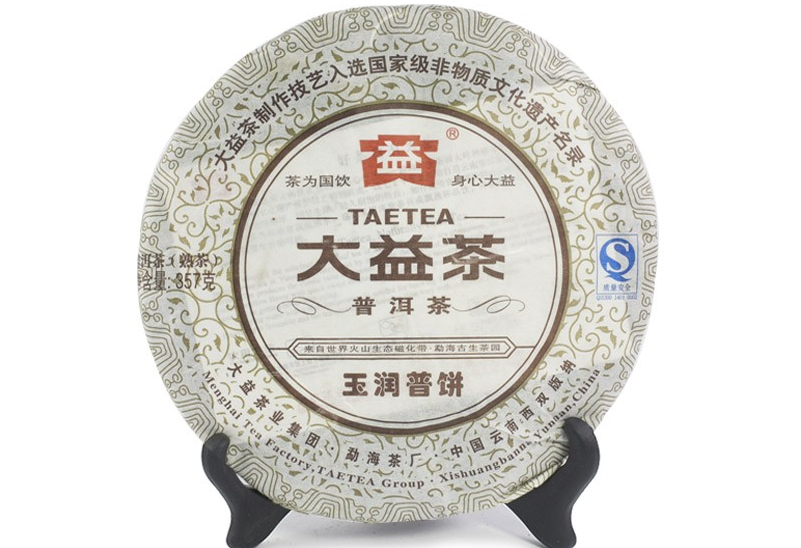
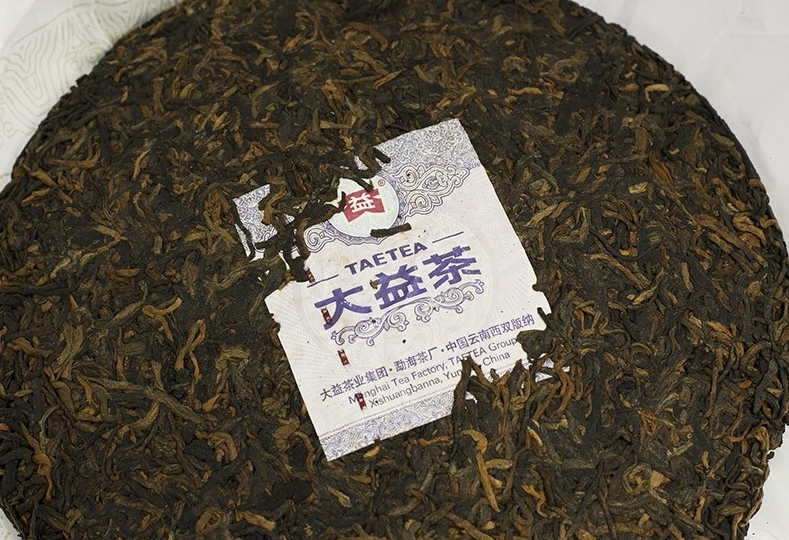
In October 2004, Menghai was sold to the Bowin Company, which is its current owner.
Today, Menghai is still the main driving force in the puerh market. Even today, its product line and factory prices influence the entire puerh world. Menghai products remain popular, even with the market trend toward collecting puerh from small producers. Menghai products are probably the most frequently counterfeited because of their relatively high price, which is due to the famous quality of their production.
Like Xiaguan Tea Factory and many other former state-owned pu-erh factories, Menghai produces much of its tea “by recipe,” with a code. Recipe numbers are formulated in a four-digit numeric format: ####. The first two digits represent the year the recipe was first released, the third digit is the grade of leaf used in the recipe, and the last digit represents the factory (1 is Kunming, 2 is Menghai, 3 is Xiaguan, 4 is Fengqing). 7542, for example, would be a recipe from 1975 using fourth-grade tea leaves made at the Menghai factory.
In general, this numbering has a relative value, as it is associated with the Chinese Tea Company and the time of its monopoly. Now each factory assigns itself any numbers. In any case, if there are doubts, it is better to clarify what the factory number means.
PS: I would also like to point out one more thing: there is raw material from Menghai County, and there is the Menghai tea factory. These are two different things. Therefore, when buying puer, if they say Menghai, immediately clarify the raw material or the factory, because Menghai is a well-known name and it is constantly used to promote their goods.